What Is a Laboratory Glass Reactor?
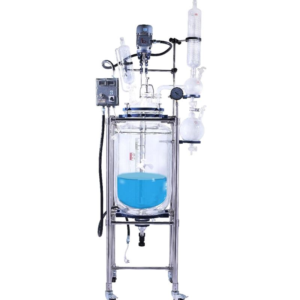
A laboratory glass reactor is a reaction vessel equipped with temperature control, stirring, and vacuum systems to perform chemical reactions safely and efficiently.
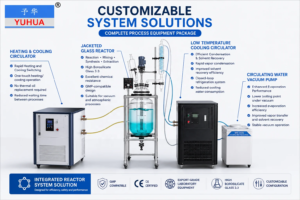
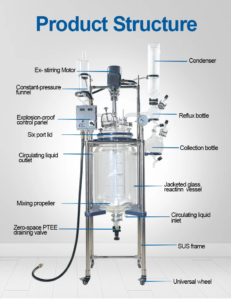
The typical system includes:
- Glass reaction vessel
- Jacketed heating and cooling system
- Mechanical or magnetic stirring system
- Condenser
- Vacuum sealing system
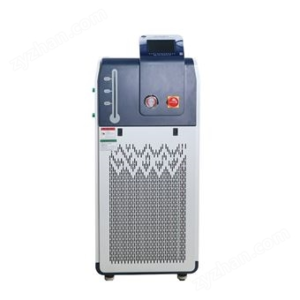
- Temperature control unit
- Feeding and discharge valves
The jacket design allows circulating heating or cooling fluids to precisely control the reaction temperature.
Working Principle of Laboratory Glass Reactor
The working principle of a laboratory glass reactor is based on controlled chemical reaction conditions.
The main operating process includes:
1. Material Loading
Raw materials are added into the glass vessel through feeding ports.
2. Temperature Control
Heating or cooling fluid circulates through the jacket to maintain the required reaction temperature.
3. Mixing and Reaction
The stirring system ensures uniform mixing and improves reaction efficiency.
4. Vacuum or Pressure Operation
The reactor can operate under vacuum conditions for evaporation, concentration, or low-temperature reactions
Main Types of Laboratory Glass Reactors
1. Single Layer Glass Reactor
A single layer glass reactor is mainly used for basic heating, mixing, and reaction experiments.
Applications:
- Chemical synthesis
- Organic reactions
- Laboratory testing
2. Double Jacket Glass Reactor
A double jacket glass reactor has an outer jacket for circulating heating or cooling liquid.
Advantages:
- Precise temperature control
- Better reaction stability
- Suitable for long-time experiments
3. Vacuum Glass Reactor
A vacuum glass reactor allows chemical reactions under reduced pressure.
Common applications include:
- Solvent evaporation
- Concentration
- Low-temperature reaction
Applications of Laboratory Glass Reactor
Chemical Research
Laboratory glass reactors are widely used for organic synthesis, catalyst research, and chemical process development.
Pharmaceutical Industry
They are used for drug development, crystallization, formulation research, and active ingredient preparation.
Biotechnology
Glass reactors are suitable for biological reactions, fermentation studies, and laboratory-scale production.
New Materials Research
Researchers use glass reactors for polymer synthesis, nanomaterial preparation, and advanced material experiments.
Food and Cosmetic Industry
Used for formulation testing, extraction, mixing, and process optimization.
Advantages of Laboratory Glass Reactor
A laboratory glass reactor offers several important advantages:
- Excellent chemical resistance
- High transparency for easy observation
- Accurate temperature control
- Flexible operation under vacuum conditions
- Easy cleaning and maintenance
- Suitable for small-scale production and research
Main Types of Laboratory Glass Reactors
1. Single Layer Glass Reactor
A single layer glass reactor is mainly used for basic heating, mixing, and reaction experiments.
Applications:
- Chemical synthesis
- Organic reactions
- Laboratory testing
2. Double Jacket Glass Reactor
A double jacket glass reactor has an outer jacket for circulating heating or cooling liquid.
Advantages:
- Precise temperature control
- Better reaction stability
- Suitable for long-time experiments
3. Vacuum Glass Reactor
A vacuum glass reactor allows chemical reactions under reduced pressure.
Common applications include:
- Solvent evaporation
- Concentration
- Low-temperature reaction
Applications of Laboratory Glass Reactor
Chemical Research
Laboratory glass reactors are widely used for organic synthesis, catalyst research, and chemical process development.
Pharmaceutical Industry
They are used for drug development, crystallization, formulation research, and active ingredient preparation.
Biotechnology
Glass reactors are suitable for biological reactions, fermentation studies, and laboratory-scale production.
New Materials Research
Researchers use glass reactors for polymer synthesis, nanomaterial preparation, and advanced material experiments.
Food and Cosmetic Industry
Used for formulation testing, extraction, mixing, and process optimization.
Advantages of Laboratory Glass Reactor
A laboratory glass reactor offers several important advantages:
- Excellent chemical resistance
- High transparency for easy observation
- Accurate temperature control
- Flexible operation under vacuum conditions
- Easy cleaning and maintenance
- Suitable for small-scale production and research
Main Types of Laboratory Glass Reactors
1. Single Layer Glass Reactor
A single layer glass reactor is mainly used for basic heating, mixing, and reaction experiments.
Applications:
- Chemical synthesis
- Organic reactions
- Laboratory testing
2. Double Jacket Glass Reactor
A double jacket glass reactor has an outer jacket for circulating heating or cooling liquid.
Advantages:
- Precise temperature control
- Better reaction stability
- Suitable for long-time experiments
3. Vacuum Glass Reactor
A vacuum glass reactor allows chemical reactions under reduced pressure.
Common applications include:
- Solvent evaporation
- Concentration
- Low-temperature reaction
Applications of Laboratory Glass Reactor
Chemical Research
Laboratory glass reactors are widely used for organic synthesis, catalyst research, and chemical process development.
Pharmaceutical Industry
They are used for drug development, crystallization, formulation research, and active ingredient preparation.
Biotechnology
Glass reactors are suitable for biological reactions, fermentation studies, and laboratory-scale production.
New Materials Research
Researchers use glass reactors for polymer synthesis, nanomaterial preparation, and advanced material experiments.
Food and Cosmetic Industry
Used for formulation testing, extraction, mixing, and process optimization.
Advantages of Laboratory Glass Reactor
A laboratory glass reactor offers several important advantages:
- Excellent chemical resistance
- High transparency for easy observation
- Accurate temperature control
- Flexible operation under vacuum conditions
- Easy cleaning and maintenance
- Suitable for small-scale production and research
Laboratory Glass Reactor Technical Advantages
| Feature | Advantage |
|---|
| Borosilicate Glass | Excellent chemical resistance |
| Transparent Vessel | Easy reaction observation |
| Jacket Heating System | Precise temperature control |
| Mechanical Stirring | Uniform mixing |
| Vacuum Design | Supports advanced reaction processes |
| Modular Structure | Easy customization |
Why Choose Our Laboratory Glass Reactor?
As a professional laboratory glass reactor supplier, we focus on providing reliable reaction equipment for research and industrial applications.
Our advantages include:
- High-quality glass materials
- Custom reactor solutions
- Stable performance
- Professional technical support
- Flexible capacity options
From small laboratory experiments to pilot-scale development, our glass reactor systems provide reliable solutions for different reaction requirements.