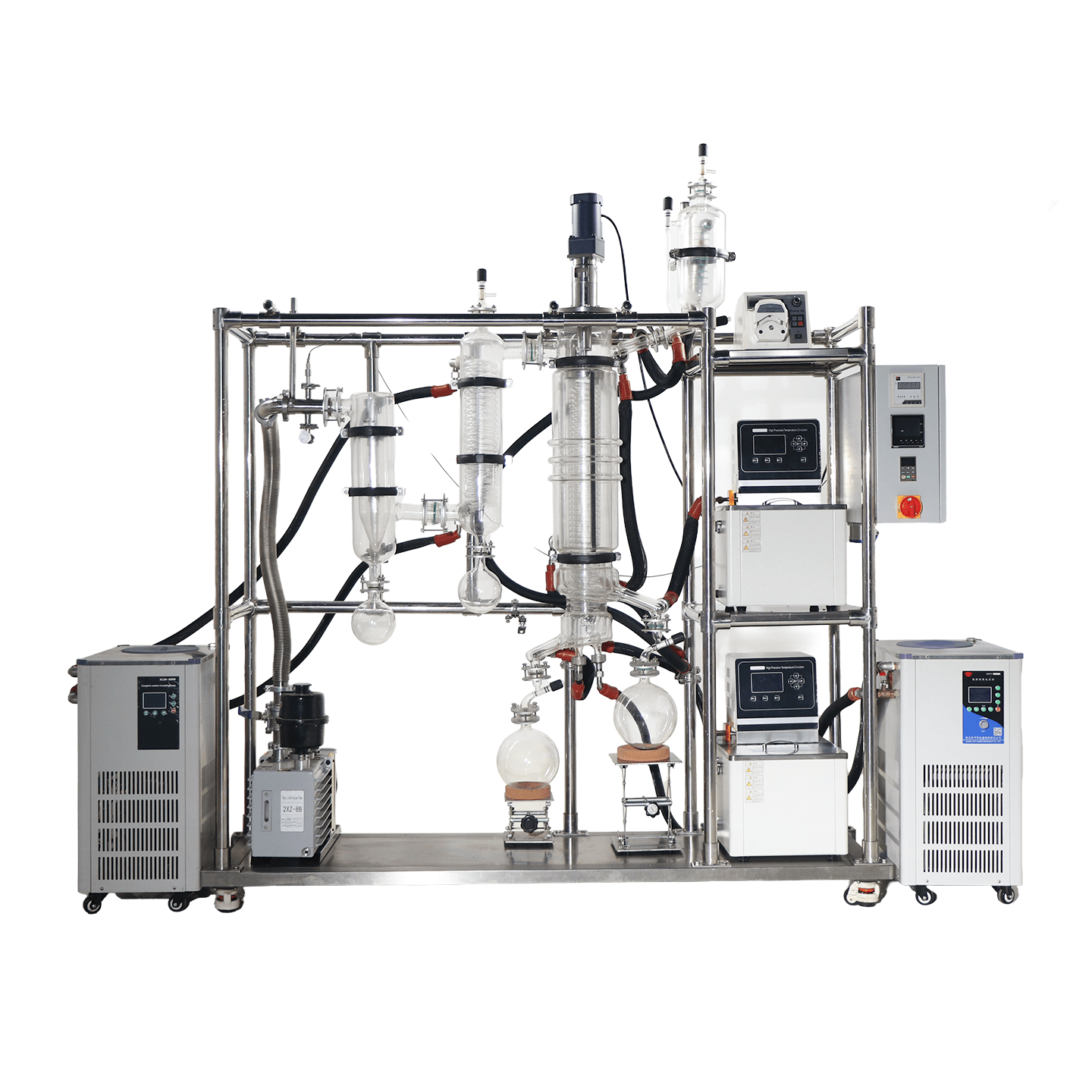
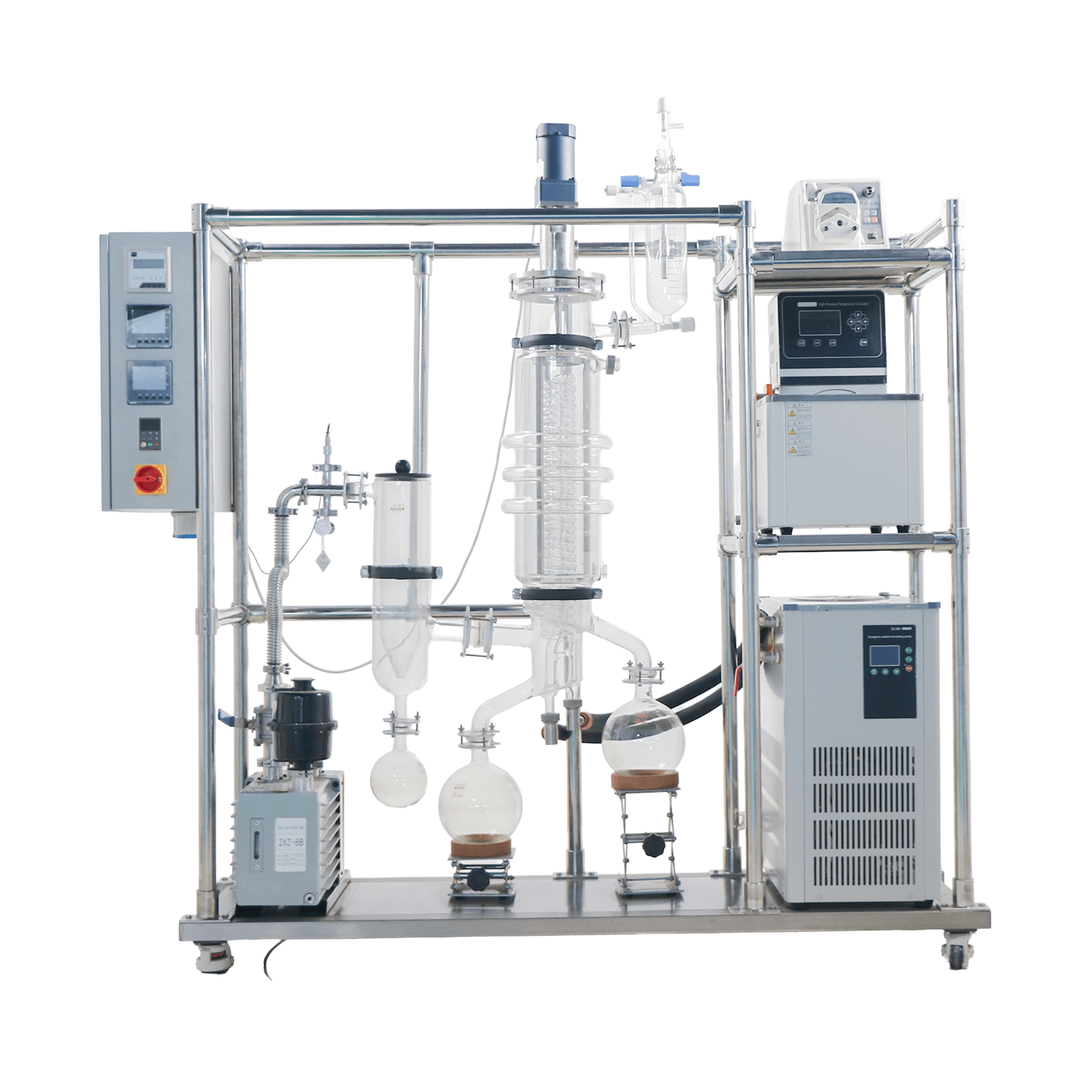
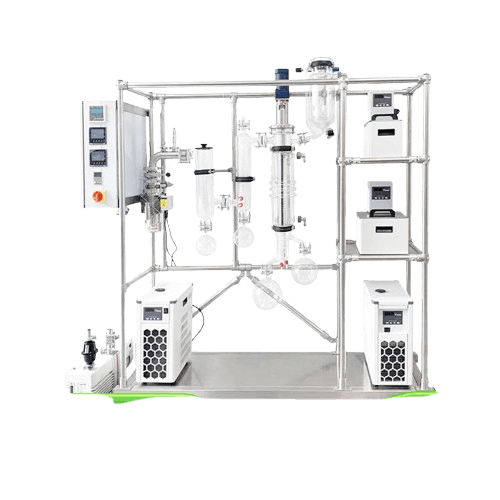
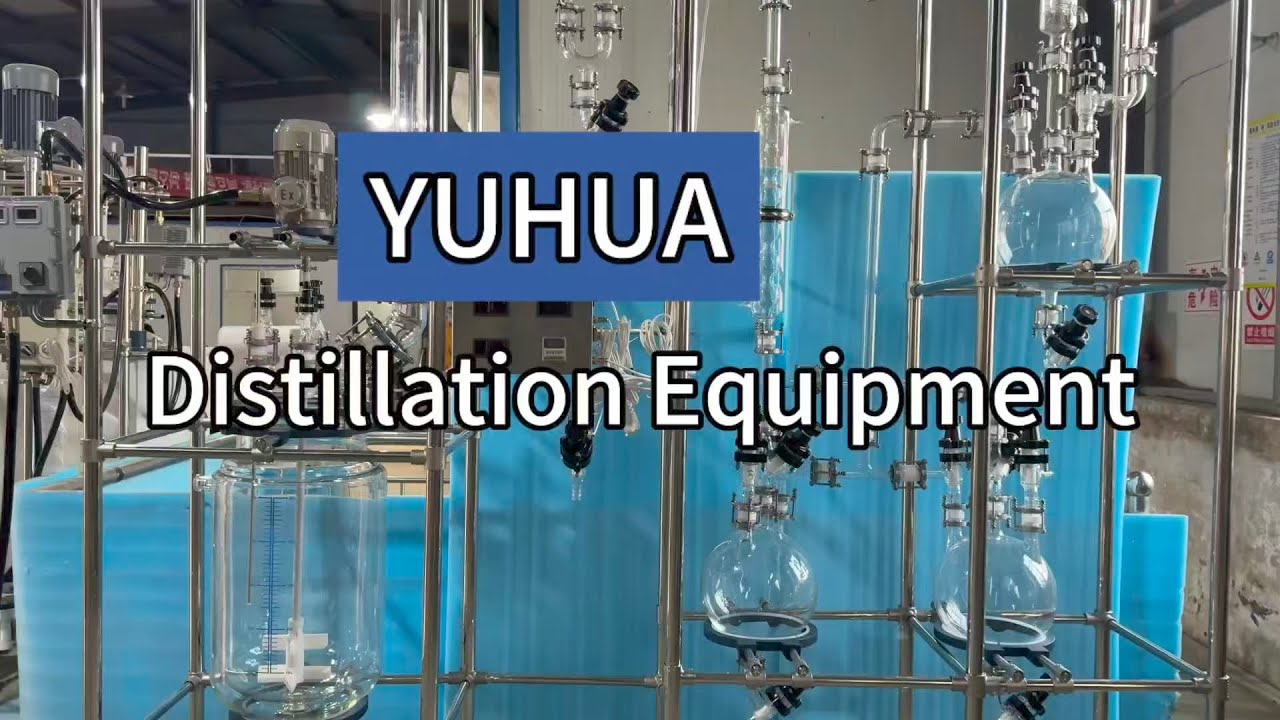
Molecular Distillation Unit
Glass Molecular Distillation System is suitable for the synthesis, separation and purification of high‑boiling‑point, hard‑to‑separate and temperature‑sensitive organic substances, and is widely applied in pharmaceutical, biological, food and other related fields. This equipment features simple structure, reasonable layout, stable operation, low noise, easy operation, convenient cleaning, long service life, as well as easy assembly, disassembly, maintenance and upkeep
Detailed Description
Short‑Path Molecular Distiller
Short‑path molecular distillation is a special liquid‑liquid separation technology. Unlike conventional distillation, which separates substances based on boiling‑point differences, it achieves separation by utilizing differences in the mean free path of molecular motion of various substances.
Specifically, as the liquid mixture flows along the heating surface, light‑weight and heavy‑weight molecules escape from the liquid surface into the gas phase. Owing to their different free paths, molecules of different substances travel different distances after escaping the liquid surface. With a properly positioned central condensing surface, light‑weight molecules reach the condensing surface, condense and are discharged, while heavy‑weight molecules fail to reach the condensing surface and flow out together with the mixed liquid. In this way, material separation is realized.
Installation Requirements
- Installation position of the molecular distiller: The unit must be installed horizontally. Secure the installation area and keep it away from rain exposure. Ambient relative humidity shall not exceed 85 %.
- After unpacking, check whether all accessories are complete, whether the equipment is damaged during transportation, and whether glass components have cracks or breakage. (Contact our company promptly if any of the above‑mentioned defects occur.)
- Install the distiller with accurate horizontal and vertical alignment. Tilting is strictly prohibited; otherwise, resonance or abnormal operation may occur during equipment operation.
- Install the equipment in accordance with the structural schematic drawing, complying with JY Teaching Instrument Standards and HG Chemical‑Industry Glass Component Standards. Seal the inner cavity of working pipelines per SY Petroleum‑Industry Standards.
- Verify compliance with installation standards before
Commissioning
- Perform system leak detection before startup. Use the matched vacuum pump to reach 0.1 MPa, and maintain constant pressure for 0.5 hours as required by feed liquid before commissioning.
- Use low‑cost media (water or ethanol) as feed liquid for commissioning.
- Set the heat‑exchange temperature to ±1 ℃ relative to the evaporation surface temperature of the feed liquid.
- Set the condensing temperature to ‑10 ℃ relative to the feed‑liquid interface.
- Start the rotor‑film wiper and confirm the rotation direction; increase speed gradually from low speed to rated speed. Meanwhile start the vacuum pump to adjust the corresponding negative pressure, and synchronously increase the feed‑liquid feeding rate from a tiny flow.
- Re‑check the evaporation behavior of feed liquid. Adjust heat‑exchange temperature and negative‑pressure differential, and observe whether the feed liquid forms turbulent flow and flows downwards.
- Calibrate the proportion of light‑weight and heavy‑weight molecules according to the component ratio of feed liquid, and adjust commissioning parameters accordingly.
- Re‑verify commissioning procedures based on confirmed commissioning parameters until separation‑process specifications are achieved.
- Clean the equipment in a timely manner upon completion of each test.
Evaporator Cleaning
- After each test, clean the evaporation inner cavity, rotor and condenser with solvent capable of dissolving the feed‑liquid components (cleaning can be performed during operation).
- After cleaning, activate heat exchange and raise temperature to the evaporation point of the cleaning solvent, so as to dry and decontaminate the evaporation inner cavity.
- Remove the balanced feed hopper for cleaning and drying.
- Take off collection flasks and dry‑ice containers for cleaning and drying.
Frequently Asked Questions (FAQ)
1. What is a Molecular Distillation Unit?
A Molecular Distillation Unit is a high-vacuum separation system designed to separate and purify heat-sensitive and high-boiling materials. It operates under extremely low pressure, allowing materials to be distilled at relatively low temperatures and with short residence times.
2. How does Molecular Distillation work?
Molecular distillation works by creating a high-vacuum environment that reduces the evaporation temperature of the material. The feed material forms a thin film on the heated evaporation surface, where volatile components evaporate and travel a short distance to the condenser. The condensed components are then collected separately.
3. What materials can be processed with a Molecular Distillation Unit?
Molecular distillation is suitable for a wide range of heat-sensitive and high-boiling materials, including essential oils, plant extracts, natural products, fatty acids, fish oil, vegetable oils, pharmaceuticals, chemical intermediates, and other specialty products.
4. What is the difference between Molecular Distillation and conventional distillation?
Compared with conventional distillation, molecular distillation operates under much higher vacuum conditions and uses a very short distance between the evaporation surface and condenser. This allows materials to be separated at lower temperatures with shorter processing times, making it particularly suitable for heat-sensitive materials.
5. Why is a high vacuum important for Molecular Distillation?
A high vacuum significantly reduces the boiling or evaporation temperature of materials. This helps minimize thermal degradation and improves the separation of high-boiling and heat-sensitive compounds.
6. What are the main advantages of a Molecular Distillation Unit?
The main advantages include:
- High vacuum operation
- Low operating temperature
- Short material residence time
- Reduced thermal degradation
- Efficient separation and purification
- Suitable for heat-sensitive materials
- Continuous processing capability
Related Products
Rotary Evaporator | Efficient Vacuum Evaporation & Solvent Recovery
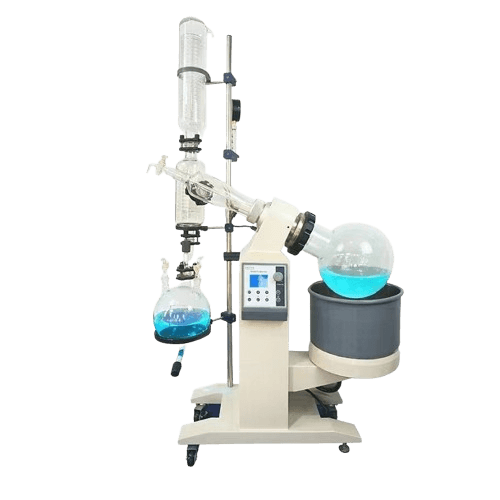
Rotary Evaporator
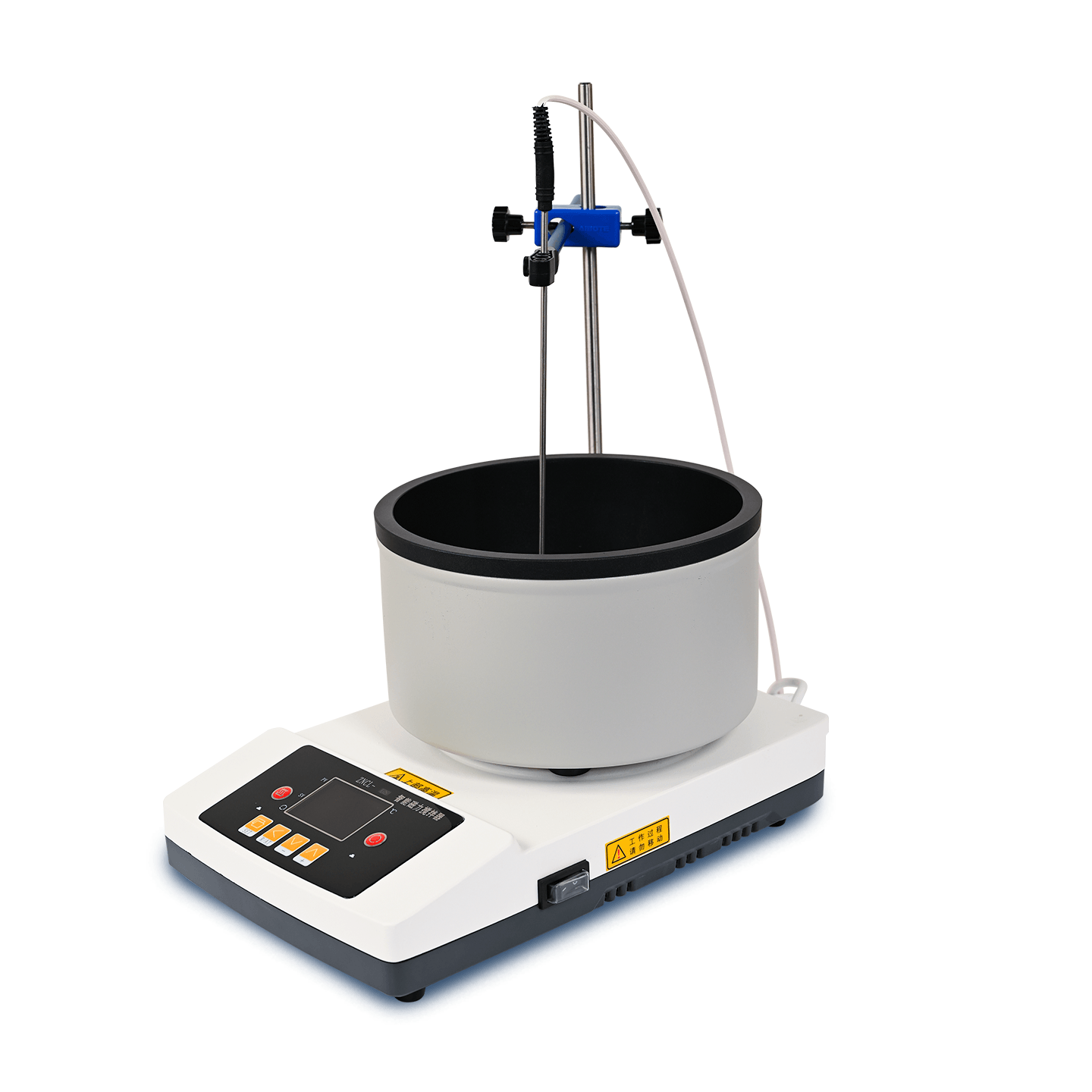
Stirring Device
Molecular Distillation Unit
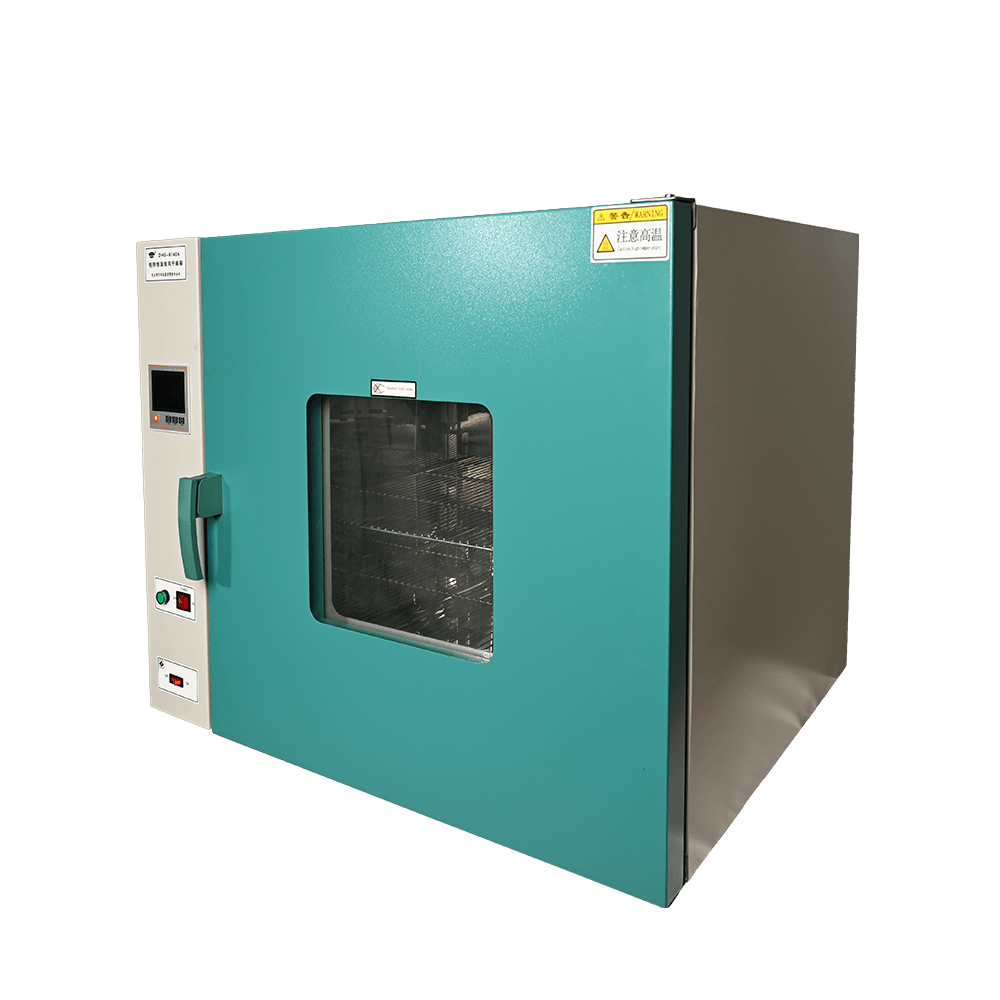
Drying Oven
Service Details
ISO International Management System Certification
ISO certified to ensure product quality and reliable performance
Environmental Management System Certification
Committed to environmental protection and sustainable development.
CE Certification
Certified to meet European safety, health, and environmental protection standards
- 40+ Years of Experience
- 200+ Skilled Employees
- 10,000+ Customer Cases
- 30+ Technical Experts
- 100+ Countries Served
- Global Project Experience