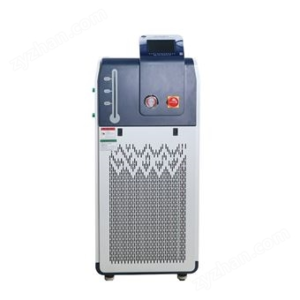
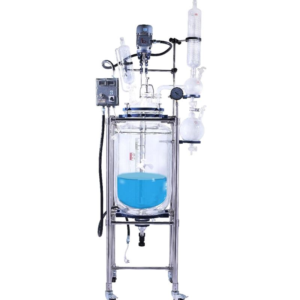
What Is a Laboratory High and Low Temperature Circulator?
A Laboratory High and Low Temperature Circulator is an advanced temperature control device that integrates heating, cooling, and liquid circulation functions into one system. It is designed to provide precise and stable temperature environments for laboratory reaction processes, chemical synthesis, pharmaceutical development, and scientific research.
Unlike traditional heating equipment or separate cooling systems, a high and low temperature integrated machine can achieve rapid temperature changes and maintain accurate temperature stability during experimental operations.
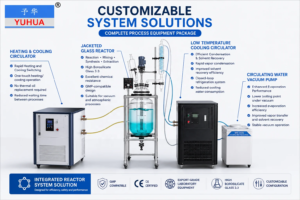
This makes it an essential temperature control solution for jacketed glass reactors, laboratory reaction systems, rotary evaporators, and other scientific equipment.
Laboratory High and Low Temperature Circulator Working Principle
The working principle of a high and low temperature circulator is based on a closed-loop thermal circulation system.
The equipment uses a heat transfer medium, such as thermal oil or special circulating fluid, which is heated or cooled inside the machine. The controlled fluid is then continuously circulated through the external equipment to transfer thermal energy.
The main working process includes:
1. Heating Process
The electric heating system increases the temperature of the circulating medium. The heated fluid is continuously delivered to the reactor jacket, providing stable heating conditions.
2. Cooling Process
The refrigeration system activates the compressor and cooling components to remove heat from the circulating fluid, achieving rapid temperature reduction.
3. Temperature Regulation
The intelligent PID control system monitors real-time temperature changes and automatically adjusts heating or cooling power to maintain precise temperature conditions.
This closed circulation design ensures:
- Fast temperature response
- High temperature accuracy
- Stable experimental conditions
- Improved energy efficiency
Key Features of Laboratory High and Low Temperature Circulator
1. Wide Temperature Range Operation
A laboratory high and low temperature circulator is designed for applications requiring both high-temperature heating and low-temperature cooling.
Depending on the model configuration, it can provide a wide operating temperature range to meet different laboratory requirements.
Typical applications include:
- Low-temperature chemical reactions
- High-temperature synthesis experiments
- Thermal cycling tests
- Material research
2. High Precision Temperature Control
Temperature accuracy is one of the most important factors in laboratory experiments.
Advanced high and low temperature circulators use intelligent control systems to provide:
- Precise temperature monitoring
- Automatic adjustment
- Stable temperature maintenance
- Reduced temperature fluctuation
High precision temperature control helps researchers achieve repeatable and reliable experimental results.
3. Fast Heating and Cooling Performance
Traditional laboratory heating and cooling methods often require long waiting times.
The modern temperature control circulator combines:
- High-efficiency compressor technology
- Optimized circulation design
- Powerful heating modules
to achieve faster temperature changes and improve overall laboratory productivity.
4. Compact Design and Easy Operation
Modern laboratory temperature control systems feature:
- Digital display interface
- User-friendly operation panel
- Safety protection functions
- Compact structure
The equipment can be easily installed in laboratories with limited space.
Applications of Laboratory High and Low Temperature Circulator
. Chemical Synthesis and Research
In chemical laboratories, temperature control directly affects reaction efficiency and product quality.
High and low temperature circulators are widely used for:
- Organic synthesis
- Catalytic reactions
- Polymerization experiments
- Chemical reaction optimization
By providing accurate thermal control, researchers can improve reaction stability and repeatability.
2. Glass Reactor Temperature Control
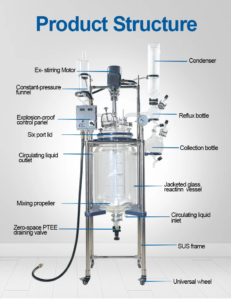
A laboratory high and low temperature circulator is commonly used with jacketed glass reactors.
The system provides precise heating and cooling circulation for:
- Single-layer glass reactors
- Double-layer glass reactors
- Pilot-scale reaction vessels
Stable temperature control helps maintain ideal reaction conditions throughout the process.
3. Pharmaceutical Research
Temperature accuracy is critical in pharmaceutical development.
High and low temperature circulators support:
- Drug formulation research
- Laboratory synthesis
- Process development
- Quality testing
Reliable temperature management improves experimental consistency and efficiency.
4. Material Research and Development
Advanced materials often require controlled thermal environments.
Applications include:
- Polymer testing
- Battery material research
- Nanomaterial experiments
- Chemical performance evaluation
Advantages Compared with Traditional Temperature Control Equipment
Laboratory High and Low Temperature Circulator Traditional Equipment
Heating and cooling integrated system Separate heating and cooling devices
Faster temperature adjustment Slow temperature response
High precision control Limited accuracy
Continuous circulation Unstable temperature distribution
Space-saving design Requires multiple devices
How to Choose the Right Laboratory High and Low Temperature Circulator?
Before selecting equipment, consider the following factors:
1. Required Temperature Range
Different experiments require different temperature capabilities.
Users should select a suitable model according to:
- Minimum temperature requirement
- Maximum temperature requirement
- Temperature stability requirements
2. Reactor Size and Heat Load
The circulator capacity should match the connected equipment.
Important parameters include:
- Reactor volume
- Heat transfer requirements
- Circulation distance
- Working medium
3. Temperature Accuracy
For sensitive experiments, higher precision control is necessary.
Applications such as pharmaceutical research and chemical synthesis usually require advanced temperature regulation systems.
4. Application Environment
Consider:
- Laboratory space
- Power requirements
- Operating conditions
- Safety requirements
Choosing the correct configuration ensures long-term stable operation.
Laboratory High and Low Temperature Circulator Manufacturer
A professional laboratory temperature control equipment manufacturer provides customized solutions for different research and industrial applications.
Manufacturing capabilities may include:
- Standard laboratory circulators
- Customized temperature control systems
- Reactor temperature control solutions
- OEM equipment production
Reliable temperature control equipment helps laboratories improve efficiency, reduce experimental errors, and achieve better research results.
Future Development Trends of Laboratory Temperature Control Systems
With the development of laboratory automation and intelligent manufacturing, temperature control equipment is becoming more advanced.
Future trends include:
- Smart temperature monitoring
- Remote operation systems
- Higher energy efficiency
- More precise control technology
- Automated laboratory integration
High and low temperature circulators will continue to play an important role in chemical, pharmaceutical, and material research.
Conclusion
A Laboratory High and Low Temperature Circulator is an essential temperature control solution for modern research laboratories. With precise temperature regulation, rapid heating and cooling performance, and wide application compatibility, it provides reliable support for chemical experiments, pharmaceutical development, and advanced material research.
For laboratories requiring stable and accurate thermal management, choosing a professional high and low temperature integrated machine can significantly improve experimental efficiency and reliability.