
Stainless Steel Reactor | Chemical Reactor Manufacturer
- 2026-10-10
Table of Contents
1. Introduction to Stainless Steel Reactors
A stainless steel reactor is a specialized vessel designed for carrying out chemical reactions, mixing, heating, cooling, dissolution, and other controlled processing operations. It is widely used in chemical manufacturing, pharmaceutical research, fine chemical production, material development, and laboratory or pilot-scale process development.
Compared with ordinary storage tanks, stainless steel reactors can be equipped with agitation systems, temperature control systems, specialized sealing structures, and process monitoring components to meet specific operating requirements.
Depending on the application, a stainless steel reactor can be designed for atmospheric, vacuum, or pressurized operation. The vessel structure, material grade, heating and cooling method, and sealing system should be selected according to the properties of the processed material and the required operating conditions.
Yuhua provides laboratory and process equipment solutions for different experimental and production requirements. Stainless steel reactor configurations can be evaluated according to the required capacity, operating temperature, pressure conditions, mixing requirements, and material compatibility.
Whether you need a compact reactor for laboratory experiments or a larger vessel for pilot-scale processing, selecting the appropriate reactor design is essential for achieving reliable operation, consistent process conditions, and efficient equipment utilization.
2. What Is a Stainless Steel Chemical Reactor?
A stainless steel chemical reactor is a vessel in which chemical or physical processes take place under controlled conditions. Its primary function is to provide a suitable environment for materials to react, mix, dissolve, crystallize, or undergo other process transformations.
The reactor may include a heating or cooling jacket, an agitator, a motor, temperature sensors, pressure monitoring instruments, and various inlet and outlet connections.
During operation, the agitator promotes material circulation and mixing, while the temperature control system helps maintain the required process temperature. Additional components can be selected according to the chemical properties of the materials and the complexity of the process.
Main Components of a Stainless Steel Reactor
Component | Function |
|---|---|
Reactor vessel | Contains the process materials and provides the reaction space |
Agitation system | Promotes mixing, material circulation, and uniformity |
Electric motor and drive | Supplies mechanical power to the agitator |
Heating or cooling jacket | Transfers heat to or from the process materials |
Temperature sensor | Measures the process or vessel temperature at the specified location |
Inlet and outlet connections | Allow material charging, sampling, discharge, and auxiliary connections |
Sealing system | Helps prevent leakage under the specified operating conditions |
Control system | Monitors or adjusts operating parameters according to the selected configuration |
Support frame | Supports the vessel and associated components |
The exact component arrangement depends on the reactor model, vessel size, process requirements, and customization options.
3. Types of Stainless Steel Reactors
Stainless steel reactors are available in different configurations to accommodate different materials and process conditions. Understanding the main reactor types helps buyers identify a suitable solution before requesting a quotation.
3.1 Jacketed Stainless Steel Reactor
A jacketed stainless steel reactor has an additional chamber surrounding part or all of the main vessel. A heating or cooling medium circulates through this jacket to transfer heat to or from the process materials.
Typical heat-transfer media include water, thermal oil, and other compatible fluids, depending on the operating temperature and system design.
Jacketed reactors are commonly used in processes requiring controlled heating, cooling, or temperature maintenance. They can be connected to suitable heating and cooling circulation equipment to support the required process conditions.
Typical applications:
Chemical synthesis
Material dissolution
Mixing and blending
Crystallization processes
Temperature-sensitive laboratory experiments
The actual heating and cooling performance depends on the jacket design, heat-transfer area, circulation rate, material properties, and temperature difference.
3.2 Pressure Stainless Steel Reactor
A pressure stainless steel reactor is designed for operation under specified positive pressure conditions. Its vessel wall thickness, closure, sealing structure, connections, and safety devices must be selected according to the applicable design requirements.
Pressure reactors may be used for reactions involving gases, elevated operating pressures, or processes that require a closed reaction environment.
Before selecting a pressure reactor, buyers should confirm the required design pressure, normal operating pressure, design temperature, reaction medium, and applicable safety standards.
A reactor suitable for atmospheric operation must not be assumed to be suitable for pressurized service.
3.3 Vacuum Stainless Steel Reactor
A vacuum stainless steel reactor is designed for processes that operate below atmospheric pressure. Depending on the process, vacuum conditions may help reduce boiling temperatures, remove volatile components, or support particular reaction and separation operations.
The reactor must have a suitable vessel structure, sealing system, connections, and vacuum compatibility for the intended operating conditions.
Typical applications include:
Vacuum-assisted mixing
Solvent removal under suitable conditions
Degassing and material preparation
Chemical processes requiring reduced pressure
Vacuum compatibility should be confirmed for the complete assembled system, rather than determined solely by the stainless steel material.
3.4 Stainless Steel Reactor with Agitator
An agitator-equipped stainless steel reactor is designed to mix materials during processing. The agitator can help improve material circulation, temperature uniformity, dissolution, and contact between different components.
Different impeller designs may be appropriate for low-viscosity liquids, viscous materials, suspensions, or other mixing tasks.
When selecting an agitator, buyers should consider the material viscosity, vessel geometry, required mixing intensity, rotational speed, and whether solids or gas are present.
3.5 Laboratory and Pilot-Scale Stainless Steel Reactors
Laboratory reactors are typically used for experiments, formulation development, and small-batch processing. Pilot-scale reactors support process validation, scale-up studies, and preparation of larger material batches.
The appropriate capacity depends on the usable working volume, required headspace, process characteristics, and expected batch size.
A larger vessel is not necessarily more suitable for every application. The working volume and mixing performance should be evaluated together with the overall process requirements.
4. Stainless Steel Materials: SS304 vs. SS316L
Material selection is one of the most important considerations when purchasing a stainless steel reactor. Different stainless steel grades offer different levels of corrosion resistance and suitability for specific process environments.
SS304 and SS316L are common stainless steel grades used in industrial and laboratory equipment. However, neither material is universally suitable for all chemicals or operating conditions.
SS304 Stainless Steel
SS304 is a widely used austenitic stainless steel known for its general corrosion resistance, formability, and broad range of applications.
It may be suitable for many general-purpose mixing, processing, and chemical applications when the process medium is compatible with the material.
Common considerations:
General corrosion resistance
Fabrication and availability
Suitability for many non-aggressive process media
Cost-effective equipment construction
Its suitability should still be evaluated against the actual chemical composition, temperature, concentration, and cleaning conditions.
SS316L Stainless Steel
SS316L is a low-carbon stainless steel containing molybdenum, which generally improves resistance to certain forms of corrosion compared with SS304.
It is often considered for applications requiring enhanced corrosion resistance, including some pharmaceutical, fine chemical, and specialty chemical processes.
Common considerations:
Improved resistance to certain chloride-containing environments
Low-carbon composition
Suitability for selected chemical processing applications
Potentially higher material cost
SS316L is not immune to corrosion. Chloride concentration, temperature, acid type, exposure duration, crevices, and other factors can significantly affect its performance.
SS304 vs. SS316L Comparison
Comparison factor | SS304 | SS316L |
|---|---|---|
General corrosion resistance | Good for many compatible environments | Generally improved for certain corrosive environments |
Molybdenum content | Not intentionally added as a principal alloying element | Contains molybdenum |
Carbon designation | Standard carbon limit for the grade | Low-carbon grade |
Typical applications | General-purpose process equipment | Selected chemical and specialty process equipment |
Material cost | Often lower | Often higher |
Chemical compatibility | Must be verified for the process medium | Must also be verified for the process medium |
How to choose: SS304 may be appropriate for general-purpose applications, while SS316L may be worth evaluating for more demanding corrosion conditions. Final selection should be based on a material compatibility assessment and the applicable design requirements.
For highly corrosive acids, strong alkalis, or high-purity applications, additional material options or specialized wetted components may be necessary.
5. Working Principle of a Stainless Steel Reactor
A stainless steel reactor operates by combining controlled material handling, mixing, and, when required, heat transfer within a vessel.
The specific operating sequence depends on the reaction process, but a typical batch operation includes the following stages.
Step 1: Material Charging
Raw materials are introduced through the designated charging port or inlet connection. The charging procedure depends on the material properties, process safety requirements, and vessel configuration.
Before operation, the operator should confirm that the materials are compatible with all wetted components.
Step 2: Agitation and Mixing
The motor drives the agitator to circulate and mix the materials inside the vessel.
Appropriate agitation can improve material distribution and help reduce temperature differences. The required impeller design and rotational speed depend on viscosity, density, solids content, and the desired mixing outcome.
Step 3: Heating or Cooling
When temperature control is required, a compatible heat-transfer medium circulates through the jacket or another designed heat-transfer structure.
A suitable external heating or cooling unit can be used to maintain the required temperature range.
For accurate temperature control, the system must be selected according to the process heat load, heat-transfer characteristics, and operating conditions.
Step 4: Reaction or Processing
The materials undergo the intended chemical or physical process under the specified conditions.
Depending on the application, the operator may monitor temperature, pressure, agitation speed, reaction time, or other process parameters.
Step 5: Discharge and Cleaning
After processing, the product is discharged through the designated outlet. The vessel and associated components are then cleaned according to the material properties and process requirements.
Cleaning procedures should consider residue removal, corrosion prevention, and compatibility with the selected cleaning agents.
6. Heating and Cooling Systems for Stainless Steel Reactors
Temperature control plays a critical role in many chemical and material-processing applications. The appropriate system depends on the required temperature range, heating or cooling duty, process stability, and reactor design.
Jacket Circulation Systems
A jacket circulation system transfers heat through the reactor jacket using a circulating fluid. It may be used for heating, cooling, or maintaining the process temperature.
Suitable heat-transfer fluids and circulation equipment must be selected according to the required operating temperature and the manufacturer’s specifications.
High and Low Temperature Circulators
A high and low temperature circulator can provide controlled heating and cooling for compatible reactor systems.
When connected to a suitable reactor jacket, it can help maintain the target process temperature over the specified operating range.
The required unit capacity depends on factors such as:
Reactor volume and material charge
Required heating and cooling rates
Target process temperature
Heat loss to the environment
Heat generated or absorbed by the reaction
Jacket heat-transfer area and circulation conditions
The rated temperature range of the circulator alone does not guarantee that the reactor contents will reach or maintain the same temperature under all operating conditions.
Important Temperature Control Considerations
Before selecting a temperature control system, confirm the minimum and maximum process temperatures, required temperature stability, heating and cooling time, heat-transfer medium, and connection requirements.
For exothermic reactions, the cooling capacity and process safety measures require particular attention.
The temperature control system must be compatible with the reactor’s design and operating conditions.
7. Applications of Stainless Steel Reactors
Stainless steel reactors are used across a wide range of industries because they can be configured for different material-handling and processing requirements.
7.1 Chemical Processing
Stainless steel reactors are used for selected chemical reactions, mixing, dissolution, and batch processing.
Material compatibility, temperature control, agitation, and pressure requirements must be evaluated for each chemical system.
7.2 Pharmaceutical and Fine Chemical Research
In pharmaceutical and fine chemical research, reactors may support formulation development, chemical synthesis, intermediate preparation, and process optimization.
Applications involving strict cleanliness or contamination control may require specific surface finishes, documentation, cleaning procedures, and material traceability.
The use of stainless steel alone does not establish pharmaceutical compliance or suitability for a regulated manufacturing process.
7.3 Resin and Polymer Processing
Certain resin and polymer processes require controlled mixing, heating, and cooling. Reactor design should account for material viscosity, heat generation, mixing torque, and potential buildup on internal surfaces.
The agitator type and motor capacity should be evaluated against the expected viscosity throughout the process, not only the initial viscosity.
7.4 Crystallization and Material Preparation
Stainless steel reactors may be used for selected crystallization and material preparation processes.
Successful crystallization depends on factors such as solubility, temperature profile, agitation, concentration, and cooling rate.
Where precise temperature control is required, the reactor and circulation system should be selected as an integrated solution.
7.5 Laboratory and Pilot-Scale Development
Laboratory and pilot-scale reactors enable researchers and process engineers to test operating parameters before scaling up a process.
They can be used to study mixing behavior, reaction temperature, batch time, and material handling.
When moving from laboratory to larger-scale equipment, buyers should consider heat transfer, mixing similarity, reaction kinetics, and the practical differences between vessel geometries.
8. Key Specifications to Consider When Purchasing a Stainless Steel Reactor
Choosing the right reactor requires more than selecting a capacity and material grade. Buyers should evaluate the full set of process and equipment requirements before confirming a configuration.
8.1 Reactor Capacity
Common capacity categories may include small laboratory vessels, medium-sized experimental reactors, and larger pilot-scale or production vessels.
The required nominal capacity should be distinguished from the usable working volume.
When determining capacity, consider:
Expected batch size
Required headspace
Foam formation or gas generation
Thermal expansion
Agitator and internal component geometry
Charging and discharge requirements
8.2 Working Temperature and Design Temperature
Working temperature refers to the temperature expected during normal operation.
Design temperature is an engineering parameter used to establish the design requirements of the equipment. It should not be treated as interchangeable with the normal working temperature.
The vessel, seals, gaskets, agitator, and auxiliary systems must all be suitable for the intended operating conditions.
8.3 Working Pressure and Design Pressure
Working pressure is the pressure expected during normal operation, while design pressure is used in establishing the equipment’s pressure-design requirements.
Buyers should specify whether the process operates at atmospheric pressure, under vacuum, or under positive pressure.
For pressure service, the complete design, fabrication, inspection, and safety provisions must comply with the applicable requirements.
8.4 Agitation Speed and Mixing Requirements
The required rotational speed depends on the material viscosity, impeller type, vessel dimensions, and mixing objective.
A high rotational speed does not automatically guarantee better mixing. Excessive speed may introduce unwanted vortex formation, foaming, shear, or mechanical load.
For viscous materials, motor torque and agitator geometry can be more important than rotational speed alone.
8.5 Sealing System
The sealing system should be selected according to the operating pressure, vacuum level, rotational speed, process medium, and leakage requirements.
Mechanical seals and other sealing arrangements have different operating limitations and maintenance requirements.
For volatile, hazardous, or highly sensitive materials, leakage control should be evaluated as part of the complete equipment design.
8.6 Heating and Cooling Requirements
Confirm whether the process requires heating, cooling, or both. Also specify the target temperature range, heating and cooling times, heat-transfer medium, and available utilities.
The selected circulation unit must provide sufficient heating or cooling capacity for the actual process load.
8.7 Additional Configuration Requirements
Depending on the application, a stainless steel reactor may require:
Temperature and pressure monitoring
Sampling and discharge ports
Specialized agitators
Vacuum connections
Heating and cooling circulation equipment
Explosion-protection measures
Customized inlet and outlet connections
Special wetted materials or surface finishes
These options should be confirmed against the intended application and the manufacturer’s available designs.
9. Customized Stainless Steel Reactor Solutions
Different process requirements may call for different reactor capacities, structures, materials, and auxiliary systems.
Yuhua can evaluate stainless steel reactor requirements according to the specific application and the equipment configuration available for the project.
Available Customization Considerations
Reactor capacity: Select a vessel size based on the required batch volume and process headspace.
Material selection: Evaluate SS304, SS316L, or other appropriate materials according to the process medium and corrosion requirements.
Agitation configuration: Consider suitable agitator designs, rotational speed, and drive capacity.
Temperature control: Match the reactor jacket and circulation equipment to the required heating and cooling conditions.
Pressure and vacuum requirements: Confirm the intended operating conditions and the corresponding design requirements.
Connections and accessories: Review charging ports, discharge arrangements, sensors, sampling points, and auxiliary connections.
Electrical and safety requirements: Confirm voltage, frequency, motor configuration, and any applicable hazardous-area requirements.
The final configuration should be based on confirmed technical requirements rather than selecting options solely by vessel size.
Information Required for a Reactor Quotation
To help identify a suitable stainless steel reactor, buyers should provide the following information whenever possible:
Required information | Example or explanation |
|---|---|
Required capacity | 5 L, 20 L, 50 L, 100 L, or another size |
Process material | Chemical name, composition, or material category |
Material of construction | SS304, SS316L, or a recommended alternative |
Working temperature | Minimum and maximum process temperatures |
Working pressure | Atmospheric, vacuum, or positive pressure |
Agitation requirements | Viscosity, desired speed, and mixing purpose |
Heating and cooling | Heating only, cooling only, or both |
Power supply | Voltage and frequency |
Safety requirements | Applicable explosion-protection or other safety needs |
Special requirements | Surface finish, connections, automation, or documentation |
Providing these details at the inquiry stage can help reduce unnecessary quotation revisions and improve the accuracy of equipment selection.
10. Why Choose Yuhua as Your Chemical Reactor Manufacturer?
Selecting a chemical reactor manufacturer involves more than comparing product prices. Buyers should evaluate whether the manufacturer understands the process requirements, can confirm the appropriate equipment configuration, and provides adequate technical communication and after-sales support.
Yuhua, Gongyi Yuhua Instrument Co., Ltd., supplies laboratory and process equipment, including reactors and associated temperature control equipment.
When evaluating a stainless steel reactor solution, customers can discuss the following aspects with the Yuhua team:
Application-Based Equipment Selection
Provide the process medium, target capacity, operating temperature, pressure requirements, and mixing conditions so that the appropriate equipment configuration can be evaluated.
Reactor and Auxiliary Equipment Coordination
For applications requiring controlled heating and cooling, the reactor can be evaluated together with compatible temperature control equipment and other necessary accessories.
Configuration Communication
Clarify the required vessel material, agitator, sealing arrangement, connections, and operating conditions before the final quotation.
Technical Documentation and After-Sales Support
Confirm the available manuals, technical documentation, warranty terms, and support arrangements for the specific equipment model before placing an order.
The most suitable reactor is the one that meets the actual process requirements, provides an appropriate safety margin, and can be operated and maintained effectively over its intended service life.
Contact Yuhua to discuss your stainless steel reactor requirements and obtain a configuration proposal based on your application.
11. How to Select the Right Stainless Steel Reactor for Your Application
Before purchasing a stainless steel reactor, buyers should follow a systematic selection process.
Step 1: Define the process.
Identify whether the equipment will be used for chemical synthesis, mixing, dissolution, crystallization, or another process.
Step 2: Confirm the material compatibility.
Review the process medium, chemical concentration, temperature, exposure time, and cleaning agents before selecting the wetted materials.
Step 3: Determine the operating conditions.
Specify the normal working temperature, design temperature requirements, working pressure, vacuum requirements, and any expected pressure fluctuations.
Step 4: Select the agitation system.
Evaluate viscosity, solids content, required mixing intensity, rotational speed, and motor torque.
Step 5: Calculate the temperature control requirements.
Determine the required heating and cooling rates and evaluate the heat-transfer performance of the reactor and its auxiliary systems.
Step 6: Confirm safety and compliance requirements.
Identify any applicable pressure-equipment requirements, hazardous-area classification, chemical handling precautions, and documentation needs.
Step 7: Review the complete configuration.
Confirm the reactor, motor, agitator, seals, sensors, circulation equipment, connections, and accessories before approving the final quotation.
Following these steps can help buyers compare reactor solutions on technical suitability rather than price alone.
12. Frequently Asked Questions About Stainless Steel Reactors
Q1: What is a stainless steel reactor used for?
A stainless steel reactor is used for controlled chemical reactions and other processing operations such as mixing, heating, cooling, dissolution, and selected crystallization processes. Its specific applications depend on the vessel design, material compatibility, and operating conditions.
Q2: What is the difference between SS304 and SS316L reactors?
SS304 is commonly used for general-purpose applications, while SS316L provides improved resistance to certain corrosive environments because of its alloy composition. Neither grade is suitable for every chemical. The correct choice depends on the medium, concentration, temperature, and exposure conditions.
Q3: Can a stainless steel reactor operate under vacuum?
Yes, if the reactor is specifically designed and rated for the intended vacuum conditions. Vessel strength, sealing, connections, and the complete system configuration must be evaluated before use under vacuum.
Q4: Can a stainless steel reactor be used for high-pressure reactions?
Some stainless steel reactors are designed for positive-pressure operation. The allowable conditions depend on the engineered vessel design, materials, seals, connections, and applicable safety requirements. An atmospheric vessel must not be used for pressurized service unless it has been appropriately designed and verified.
Q5: How is a stainless steel reactor heated and cooled?
Depending on its design, a reactor may use an external heating system, a jacket with circulating heat-transfer fluid, or another suitable heat-transfer arrangement. The selection depends on the target temperature, required heating and cooling rates, and process heat load.
Q6: How do I choose the right reactor capacity?
Choose the nominal vessel capacity according to the required batch size, usable working volume, headspace, material characteristics, and mixing requirements. The nominal capacity is not necessarily equal to the recommended operating volume.
Q7: What agitator is suitable for a stainless steel reactor?
The appropriate agitator depends on viscosity, vessel dimensions, solids content, required mixing intensity, and the process objective. Impeller type, rotational speed, and motor torque should be evaluated together.
Q8: Can a stainless steel reactor be customized?
Depending on the manufacturer’s available designs, customization may include vessel capacity, material grade, agitator configuration, temperature control, connections, sealing arrangements, and monitoring instruments. Special requirements should be confirmed before ordering.
Q9: Is a stainless steel reactor suitable for corrosive chemicals?
It depends on the chemical composition, concentration, temperature, exposure duration, and the reactor’s wetted materials. Some corrosive media may require specialized alloys, linings, or non-metallic components. Material compatibility should be verified before equipment selection.
Q10: What information is needed to request a quotation?
Provide the required capacity, process medium, material grade if known, working temperature, working pressure, agitation requirements, heating and cooling needs, power supply, and any special safety or documentation requirements.
This information helps the manufacturer evaluate the equipment configuration and prepare a more accurate quotation.
13. Conclusion
Stainless steel reactors are versatile process vessels used in chemical processing, laboratory research, material preparation, and pilot-scale development. Their performance depends on the coordinated design of the vessel, material selection, agitation system, temperature control, sealing arrangement, and safety provisions.
Choosing the right reactor requires a clear understanding of the process medium, operating temperature, pressure, batch volume, and mixing requirements. SS304 and SS316L are common material options, but the final selection should always be based on chemical compatibility and the intended operating conditions.
As a chemical reactor manufacturer, Yuhua can discuss reactor and auxiliary equipment requirements with customers to help evaluate suitable configurations for their applications.
Contact Yuhua today to discuss your stainless steel reactor requirements and request a solution tailored to your process.
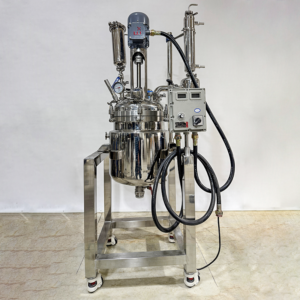
Stainless Steel Reactor: A Complete Guide to Industrial and Laboratory Applications
Stainless Steel Reactor | Chemical Reactor Manufacturer 2026-10-10 Table of Contents 1. Introduction to Stainless Steel Reactors A stainless steel reactor is a specialized
Molecular Distillation: Which Materials Are Suitable for the Process?
Molecular Distillation: Which Materials Are Suitable for the Process? 2026-9-23 Table of Contents Introduction H1: Molecular Distillation: Which Materials Are Suitable for the Process? When
High & Low Temperature Circulator | Reactor Temperature Control System
High & Low Temperature Circulator | Reactor Temperature Control 2026-9-20 Table of Contents Introduction A high & low temperature circulator is a temperature control system
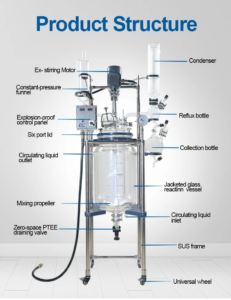
Glass Reactor: Efficient Solution for Laboratory Chemical Reactions
H1标题 2026-8-27 Table of Contents Glass Reactor | Laboratory Reactor for Heating, Cooling & Mixing A glass reactor is a laboratory reaction vessel designed for
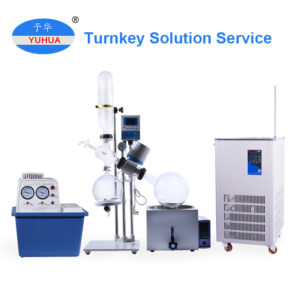
Rotary Evaporator: Efficient Vacuum Evaporation for Laboratory and Pilot-Scale Applications
Rotary Evaporator for Efficient Vacuum Evaporation & Solvent Recovery 2026-8-27 Table of Contents Rotary Evaporator for Efficient Vacuum Evaporation & Solvent Recovery A rotary
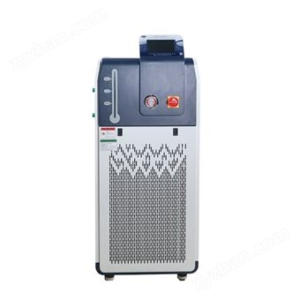
Laboratory High and Low Temperature Circulator
Laboratory High and Low Temperature Circulator 2026-8-27 Table of Contents What Is a Laboratory High and Low Temperature Circulator? A Laboratory High and Low Temperature