Rotary Evaporator for Efficient Vacuum Evaporation & Solvent Recovery
A rotary evaporator, also known as a rotavap, is widely used for solvent evaporation, sample concentration and solvent recovery in laboratories, research institutions and pilot-scale applications.
By combining controlled heating, flask rotation, vacuum evaporation and efficient condensation, a rotary evaporator can remove solvents under reduced pressure and at relatively low temperatures.
This makes rotary evaporation particularly useful for applications where efficient solvent removal, gentle processing and solvent recovery are important.
What Is a Rotary Evaporator?
A rotary evaporator is equipment used to remove volatile solvents from liquid samples through controlled evaporation under vacuum.
The basic principle is relatively simple. The sample is placed inside a rotating evaporation flask, while the heating bath provides controlled thermal energy. A vacuum pump reduces the pressure inside the system, lowering the boiling point of the solvent. As the flask rotates, the liquid forms a thin film on the inner wall of the flask, increasing the evaporation surface area.
The resulting solvent vapor then enters the condenser. The condenser removes heat from the vapor and converts it back into liquid. The recovered solvent is collected in the receiving flask.
The basic process can therefore be described as:
Heating → Rotation → Vacuum → Evaporation → Condensation → Solvent Recovery
This combination allows rotary evaporators to provide controlled and efficient solvent removal for a wide range of laboratory applications.
How Does a Rotary Evaporator Work?
The operation of a rotary evaporator depends on the interaction of several key parameters, including temperature, vacuum level, rotation speed and condenser temperature.
1. Controlled Heating
The evaporation flask is partially immersed in a temperature-controlled water or oil bath.
The heating bath transfers heat to the sample and provides the energy required for solvent evaporation. The appropriate bath temperature depends on the solvent, sample characteristics, vacuum level and desired evaporation rate.
Compared with direct heating, a controlled heating bath provides more uniform heat transfer and allows the operator to adjust the evaporation conditions more precisely.
2. Flask Rotation
The evaporation flask rotates continuously during operation.
Rotation spreads the liquid sample over the inner surface of the flask, forming a relatively thin liquid film. This increases the effective surface area available for evaporation and improves heat and mass transfer.
The rotation also helps reduce localized overheating and can promote more uniform evaporation.
The actual rotation speed should be selected according to the sample volume, viscosity, foaming characteristics and process requirements.
3. Vacuum Evaporation
A vacuum pump is used to reduce the pressure inside the rotary evaporation system.
When system pressure decreases, the boiling point of many solvents also decreases. As a result, the solvent can often be evaporated at a lower temperature than would be required under atmospheric pressure.
This is one of the main reasons rotary evaporators are widely used for solvent removal from temperature-sensitive materials.
The required vacuum level depends on factors such as:
- Solvent type
- Solvent boiling point
- Heating temperature
- Sample characteristics
- Condenser temperature
- Required evaporation rate
Therefore, a suitable vacuum level should be selected according to the actual application rather than simply using the deepest possible vacuum.
4. Solvent Vapor Condensation
After evaporation, the solvent vapor travels through the vapor duct into the condenser.
The condenser is supplied with a cooling medium, usually water or a low-temperature circulating fluid. Heat is removed from the solvent vapor, causing it to condense back into liquid form.
The condenser therefore plays an important role in both evaporation efficiency and solvent recovery.
For solvents with relatively high volatility, sufficient condenser cooling capacity is especially important.
5. Solvent Collection
The condensed solvent flows into the receiving flask and is collected separately from the concentrated sample.
Depending on the solvent and application, the recovered solvent may be reused, further processed or disposed of according to the applicable laboratory procedures.
This makes rotary evaporation useful not only for concentration but also for reducing solvent loss during laboratory processes.
Why Use a Rotary Evaporator for Vacuum Evaporation?
Rotary evaporation provides several advantages compared with conventional atmospheric evaporation.
Lower Evaporation Temperature
Vacuum operation reduces the boiling point of the solvent, allowing evaporation at a lower temperature under appropriate conditions.
This can be particularly useful when working with heat-sensitive compounds or materials that may be affected by prolonged exposure to high temperatures.
Efficient Evaporation
The rotating flask creates a thin liquid film over a larger surface area.
Combined with controlled heating and reduced pressure, this promotes efficient heat and mass transfer and helps accelerate solvent removal.
Gentle Processing
Because evaporation can be performed at reduced pressure and relatively low temperatures, rotary evaporation is often suitable for applications where excessive heating should be avoided.
The actual operating conditions should always be determined according to the sample and solvent properties.
Effective Solvent Recovery
The solvent vapor is continuously directed toward the condenser, where it is cooled and collected.
This allows the rotary evaporator to perform evaporation and solvent recovery within the same system.
Adjustable Process Conditions
The operator can adjust several parameters, including:
- Heating temperature
- Rotation speed
- Vacuum level
- Condenser temperature
- Evaporation time
This provides greater flexibility for different solvents and sample types.
Main Components of a Rotary Evaporator
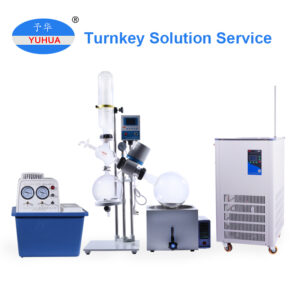
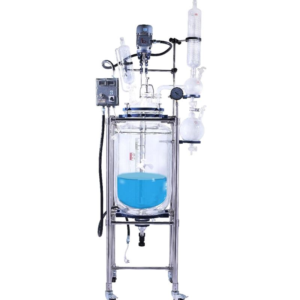
A rotary evaporator is not simply a rotating flask. It is an integrated evaporation system consisting of several important components.
Evaporation Flask
The evaporation flask contains the sample or solvent to be evaporated.
Its capacity is selected according to the working volume and application scale.
Typical laboratory capacities include 1 L, 2 L, 3 L, 5 L and 10 L, while larger systems can be configured for pilot-scale applications such as 20 L, 50 L or more.
Heating Bath
The heating bath provides controlled heating for the evaporation flask.
Depending on the model, the bath may use water or another suitable heat-transfer medium.
Temperature control should be selected according to the solvent and sample requirements.
Rotation Motor
The motor drives the evaporation flask at a controlled rotation speed.
Continuous rotation helps form a thin liquid film and increases the evaporation surface area.
Condenser
The condenser cools the solvent vapor and converts it back into liquid.
Different condenser configurations can be selected according to the application, solvent type and required condensation performance.
Receiving Flask
The receiving flask collects the condensed solvent.
For applications involving larger solvent quantities, a larger receiving capacity or double receiving flask configuration may be considered.
Vacuum System
The vacuum system creates the reduced-pressure environment required for rotary evaporation.
It normally consists of a vacuum pump, vacuum tubing and appropriate connections. A vacuum controller can also be added when more precise vacuum regulation is required.
Sealing System
The sealing system helps maintain vacuum tightness during operation.
Seals and other wetted components should be compatible with the solvent being processed.
Lifting Mechanism
The lifting mechanism allows the evaporation flask to be raised or lowered relative to the heating bath.
Depending on the model, manual or automatic lifting configurations may be available.
Rotary Evaporator and Solvent Recovery
One of the main applications of rotary evaporators is solvent recovery.
During evaporation, the solvent changes from liquid to vapor. Instead of allowing the vapor to escape, the rotary evaporator directs it into a cooled condenser.
The condenser converts the vapor back into liquid, which is then collected in the receiving flask.
A typical solvent recovery process is:
Sample Solution
↓
Vacuum + Heating
↓
Solvent Evaporation
↓
Solvent Vapor
↓
Condenser Cooling
↓
Condensed Solvent
↓
Receiving Flask
The efficiency of solvent recovery depends on several factors, including:
- Solvent properties
- Vacuum level
- Heating temperature
- Condenser temperature
- Cooling capacity
- Vapor load
- System sealing performance
For this reason, the rotary evaporator, vacuum pump and cooling system should be considered as a complete system.
Rotary Evaporator with Vacuum Pump
A vacuum pump is normally an essential part of a rotary evaporation system.
The pump reduces the pressure inside the evaporation system and helps establish the conditions required for solvent evaporation.
When selecting a vacuum pump, several factors should be considered.
Required Vacuum Level
Different solvents and applications may require different vacuum conditions.
Pumping Speed
The pumping speed should be suitable for the system size and expected vapor load.
Chemical Compatibility
The pump should be compatible with the solvents being processed.
Solvent Resistance
When working with aggressive or volatile solvents, the materials exposed to the vapor should be carefully considered.
Oil-Free Operation
Oil-free pumps can be considered for applications where oil contamination should be avoided.
The vacuum pump should therefore be selected together with the rotary evaporator rather than considered as an independent component.
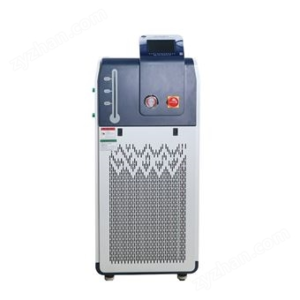
Rotary Evaporator with Chiller
The condenser needs an adequate cooling source to efficiently condense solvent vapor.
A chiller or low-temperature circulator can provide a continuous flow of cooling medium to the condenser.
It is important to distinguish between the two temperature-control systems commonly used in a complete setup:
Heating Bath / Temperature Control → Controls the sample or evaporation temperature
Chiller / Low-Temperature Circulator → Provides cooling for the condenser
These systems perform different functions and are not interchangeable.
For applications involving high vapor loads or low-boiling solvents, sufficient condenser cooling can be particularly important for efficient solvent recovery.
How to Choose the Right Rotary Evaporator?
Choosing a rotary evaporator should be based on the actual working conditions rather than flask capacity alone.
1. Working Volume
The first consideration is the typical sample volume that needs to be processed.
A larger flask does not necessarily mean better performance if the actual sample volume is small.
Common options include:
- 1–2 L: Small-scale laboratory work
- 3–5 L: Routine laboratory applications
- 10 L: Larger laboratory or pilot-scale research
- 20 L: Pilot-scale processing
- 50 L and above: Larger-scale applications
The recommended working volume should also leave sufficient space for foaming and boiling during operation.
2. Solvent Type
The solvent has a direct influence on the required evaporation conditions.
Common solvents used with rotary evaporators include:
- Ethanol
- Methanol
- Acetone
- Ethyl acetate
- Hexane
- Water
- Other volatile organic solvents
Different solvents have different boiling points, vapor pressures and chemical compatibility requirements.
3. Required Temperature
The heating temperature should be selected according to the solvent, vacuum level and sample characteristics.
For heat-sensitive materials, reduced-pressure evaporation can help achieve solvent removal at lower temperatures.
4. Required Vacuum
The required vacuum level depends on the solvent and desired evaporation temperature.
A suitable vacuum pump should provide sufficient vacuum performance without unnecessarily exceeding the requirements of the application.
5. Condenser Performance
The condenser should be able to handle the expected solvent vapor load.
When selecting a system, consider:
- Condenser surface area
- Cooling temperature
- Cooling flow
- Solvent volatility
- Expected evaporation rate